 English (Canada)
 Dansk
Dansk Deutsch
 English
 English (UK)
 Español
 Francais
 Italiano
 Magyar
 Nederlands
 Norsk
Norsk Polski
 Português (Brasil)
 Pycckui
 Suomi
Suomi Svenska
 עברית
עברית العربية
 日本语
日本语 繁體中文
繁體中文 한국어
한국어
Can any computer use cat8?
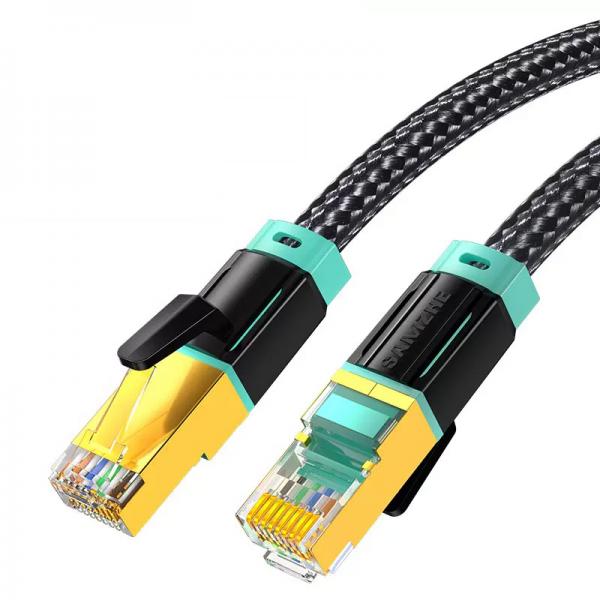
When it comes to upgrading your network infrastructure, the choice of Ethernet cable can make a significant difference in terms of speed, reliability, and future-proofing your setup. Category 8 (Cat8) Ethernet cables represent the pinnacle of current Ethernet technology, offering exceptional performance characteristics. However, whether any computer can use Cat8 cables is not a straightforward yes or no answer; it depends on several factors including hardware compatibility, network requirements, and the intended use case.
Understanding Cat8 Cables
Cat8 cables are designed to support data rates of up to 25 Gbps or even 40 Gbps over short distances, typically up to 30 meters. They are shielded cables, which means they are less susceptible to interference and crosstalk, making them ideal for environments with a lot of electronic noise. These cables conform to the ANSI/TIA-568-C.2-1 standard and are primarily used in data centers where high-speed connections are crucial.
Hardware Compatibility
The first consideration when determining if a computer can use Cat8 cables is hardware compatibility. Most consumer-grade computers and devices are equipped with Ethernet ports that support up to Cat6 or Cat6a cables, which can handle speeds of up to 1 Gbps or 10 Gbps respectively. To fully utilize the capabilities of Cat8, your computer or network device must have a network interface card (NIC) that supports higher speeds, typically 25 Gbps or 40 Gbps.
High-end servers and workstations often come with these advanced NICs, but for most consumer-grade computers, an upgrade would be necessary. This upgrade could involve installing a new NIC that supports higher speeds, assuming your computer's motherboard has the capacity for such an upgrade. Additionally, the rest of your network infrastructure, including switches and routers, must also support these higher speeds to take full advantage of Cat8 cables.
Network Requirements
Another consideration is whether your network requirements justify the use of Cat8 cables. For most home and small office setups, Cat6 or Cat6a cables are more than sufficient, as they support speeds that exceed typical internet connection speeds. Cat8 cables are most beneficial in environments where massive data transfers occur regularly, such as in data centers, server farms, or high-performance computing environments.
If your network is primarily used for basic internet browsing, streaming, and file sharing, you may not see a significant benefit from upgrading to Cat8 cables. However, if your operations involve large-scale data processing, cloud computing, or other bandwidth-intensive tasks, Cat8 could be a worthwhile investment.
Installation Considerations
Installing Cat8 cables involves more than just plugging them into your devices. Due to their shielding and thicker gauge, Cat8 cables are less flexible than their predecessors, which can make installation more challenging, especially in tight spaces. Proper installation is crucial to ensure optimal performance and avoid potential issues such as signal degradation.
Moreover, the connectors used for Cat8 cables are typically RJ45, which are compatible with most Ethernet ports. However, ensuring that each connection point in your network supports the necessary speed and bandwidth is essential. This includes verifying the specifications of your switches, routers, and any other intermediary devices.
Cost Implications
Cat8 cables are significantly more expensive than Cat6 or Cat6a cables, both in terms of the cables themselves and the associated hardware upgrades required to support them. Before making the investment, it's important to assess whether the performance gains align with your budget and operational needs.
For businesses or individuals who require the highest possible network speeds and reliability, the investment in Cat8 may be justified. However, for those with more modest needs, the cost-to-benefit ratio might not be favorable.
Future-Proofing Your Network
One of the main advantages of Cat8 cables is their ability to future-proof your network. As technology continues to advance and data demands increase, having a network infrastructure that can handle higher speeds can be a significant advantage. While current consumer-grade devices may not fully utilize the capabilities of Cat8, future devices likely will.
Investing in Cat8 cables now could mean fewer upgrades and replacements in the future, as your network will already be equipped to handle increased data loads and speeds. This can be particularly beneficial for businesses planning for growth or anticipating increased data demands.
Practical Use Cases
While Cat8 cables may seem like overkill for a standard home setup, there are several practical use cases where they can be advantageous:
-
Data Centers: The high-speed capabilities of Cat8 cables make them ideal for data centers where large volumes of data are transferred rapidly between servers.
-
Server Farms: In environments where multiple servers are interconnected, Cat8 can provide the necessary bandwidth to ensure smooth and efficient operations.
-
High-Performance Computing: For applications that require significant computational power and data transfer, such as scientific research or complex simulations, Cat8 cables can be crucial.
-
Media Production: In industries like film and video production, where large files are routinely transferred and edited, Cat8 can help streamline workflows and reduce transfer times.
Conclusion
In summary, while any computer can technically use Cat8 cables, the real question is whether it should. The decision to upgrade to Cat8 should be based on a careful assessment of your hardware compatibility, network requirements, installation challenges, cost implications, and future-proofing goals. For most users, Cat6 or Cat6a cables will suffice, but for those with specific high-speed data needs, Cat8 offers an impressive solution that can meet the demands of modern and future networking environments.


